3 min read
Starship Flight 15: a historic day
Launched on November 13, 2026, Starship was caught by the tower on the 14th, after a 22-hour orbital flight. A world first, and one more day toward the Moon, Mars and interplanetary travel.
On November 13, 2026, SpaceX launched Starship for the fifteenth time from Starbase, Texas. And the next day, November 14, something happened that no rocket had ever done: the ship came back from orbit and was caught by the arms of its launch tower.
It is historic. There is no other word for it.
What happened
- Liftoff (November 13, 22:47 UTC): Starship lifts off from Starbase and the ship reaches orbit, only the second time after Flight 14.
- Satellites: it deploys a new batch of Starlink V3 satellites, the second one after the previous flight.
- Booster: SpaceX called off the catch because of a guidance issue. It made a controlled splashdown in the Gulf of Mexico about 6.5 minutes after liftoff.
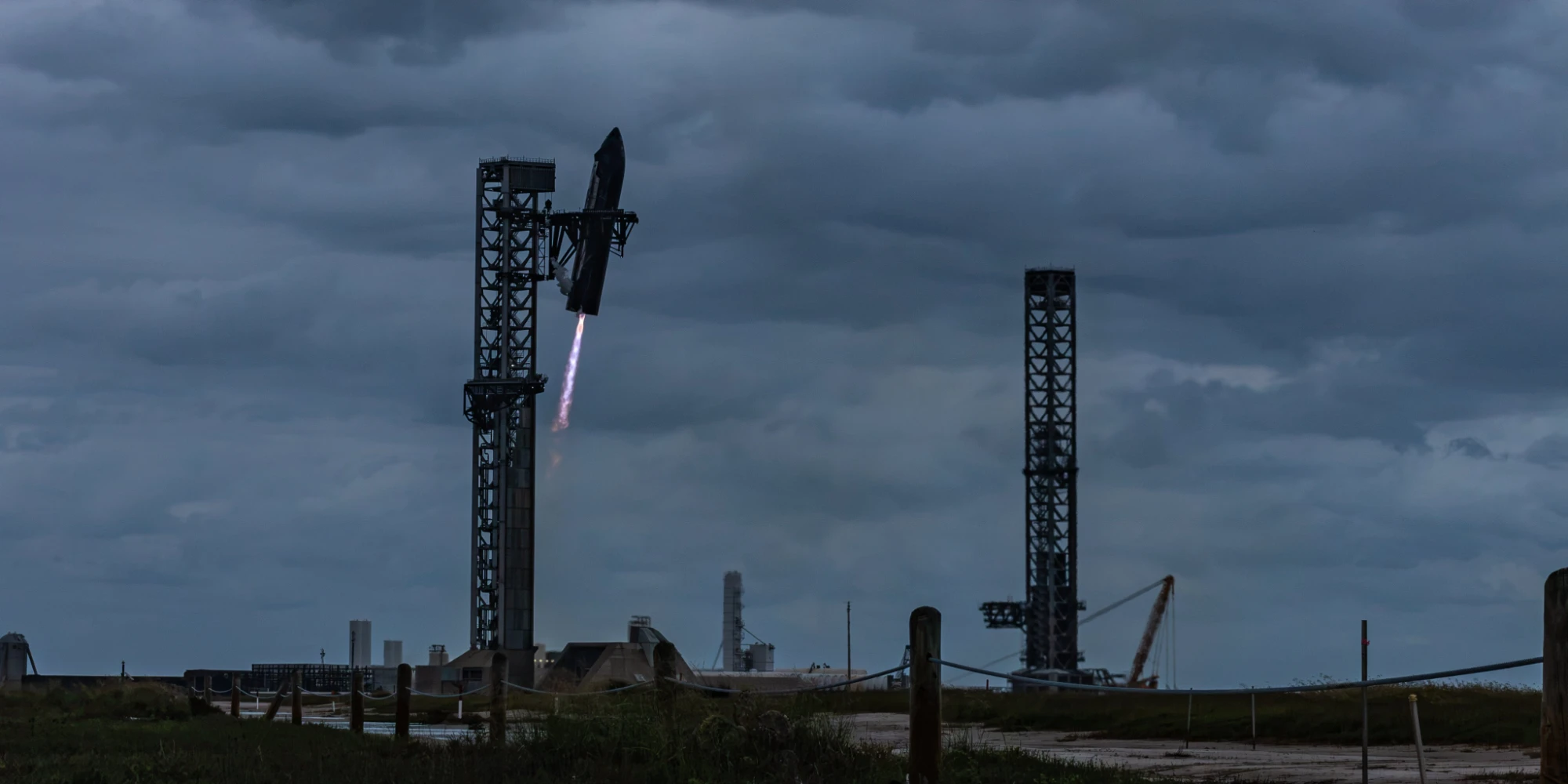
- Ship: Ship 42 orbited Earth 14 times over about 22.5 hours, then reentered, flew back to Texas and settled between the tower's "chopsticks" on November 14 around 21:20 UTC.
No booster catch, so no double catch this time. But the real feat was the ship.
Why it is huge
SpaceX has been catching boosters since 2024. A booster comes down fast, from fairly low, and not from very far.
The ship is another story. It comes back from orbit at nearly 27,000 km/h, goes through reentry at over 1,000 °C, then has to hit a tower to the meter. Doing it after a full day in space proves the whole system holds: heat shield, navigation, engines that relight.
An orbital ship caught by the tower is a ship you can fly again without fishing it out of the ocean. That is the missing piece of a fully reusable rocket. And a fully reusable rocket means the cost per kilo collapses.
One more day toward the Moon, Mars and interplanetary travel
That is why this flight matters so much. Everything SpaceX wants to do next sits on this brick:
- The Moon: Starship is NASA's chosen lander to bring astronauts back to the Moon with Artemis. It needs orbital refilling, so many flights, so reusable ships.
- Mars: sending cargo then humans means flying whole fleets of Starships during launch windows. Impossible if every ship ends up at the bottom of the sea.
- Interplanetary travel: the long-term goal, making humanity multiplanetary, only makes sense if going to space becomes as routine as a plane flight. Catching a ship on its return is exactly that.
Every Starship flight brings that future closer. This one more than the others. One more day toward the Moon, toward Mars, and toward interplanetary travel.
Next step: the double catch, booster and ship on the same flight. I can't wait.